
Travel to the field and tips to avoid heat wave exposure:
My rural experience in India was
concentrated in different villages of Yavatmal district in Maharashtra. Yavatmal
is located at a distance of 700 kms from Mumbai. This area is famous for 3 different reasons
a). cotton cultivation, b). extreme dry heat region of India (Maximum
temperature goes up to 120 0F)
and c). severe water problem.
I spent six weeks in this region
when temperature was ranging between 1100F and 1200F. It was a challenge as well as good learning
experience to deal extreme dry heat. Some of the tips to survive in high
temperature zone are a). drink water
at regular interval (prefer bottled/mineral water), b). avoid sun light during peak hrs. If it is essential to come out
in extreme sunlight, use cotton towel on head to avoid heat wave exposure. c). keep essential medicines such as
electrolytes, paracetamol (fever) and
medicine for headache, and d). use light during night to roam in village
areas (I saved myself from deadly scorpion couple of times. Fig-2 shows my
second encounter with deadly scorpion of the region).
 |
| Fig-1: My home for six weeks in the field |
 |
| Fig-2: My second encounter with a deadly scorpion |
 |
| Fig-3: My breakfast and tea in the field |
During my field visit, I met wonderful people of NGO partner.
They were very helpful and provided good
support while staying in the field. I wouldn't have been able to work in such extreme conditions without NGO and organization's support.
 |
| Fig-4: My team during field visit (2nd from left is head of NGO) |
Water problem in the region:
My work was concentrated around
Palaskund village of district Yavatmal. This village has ~100 families. Sources of income for this village are daily wage, farming or both. It has four
water sources. Ironically, not a single water
source is available throughout the year. The nearest water source is at a
distance of ~200 m and farthest water source is at a distance of ~3 Km. Fig-5 shows
most common water source. Fig 6 shows dried well. People are collecting water. Fig
7 shows path to common water source during summer season.
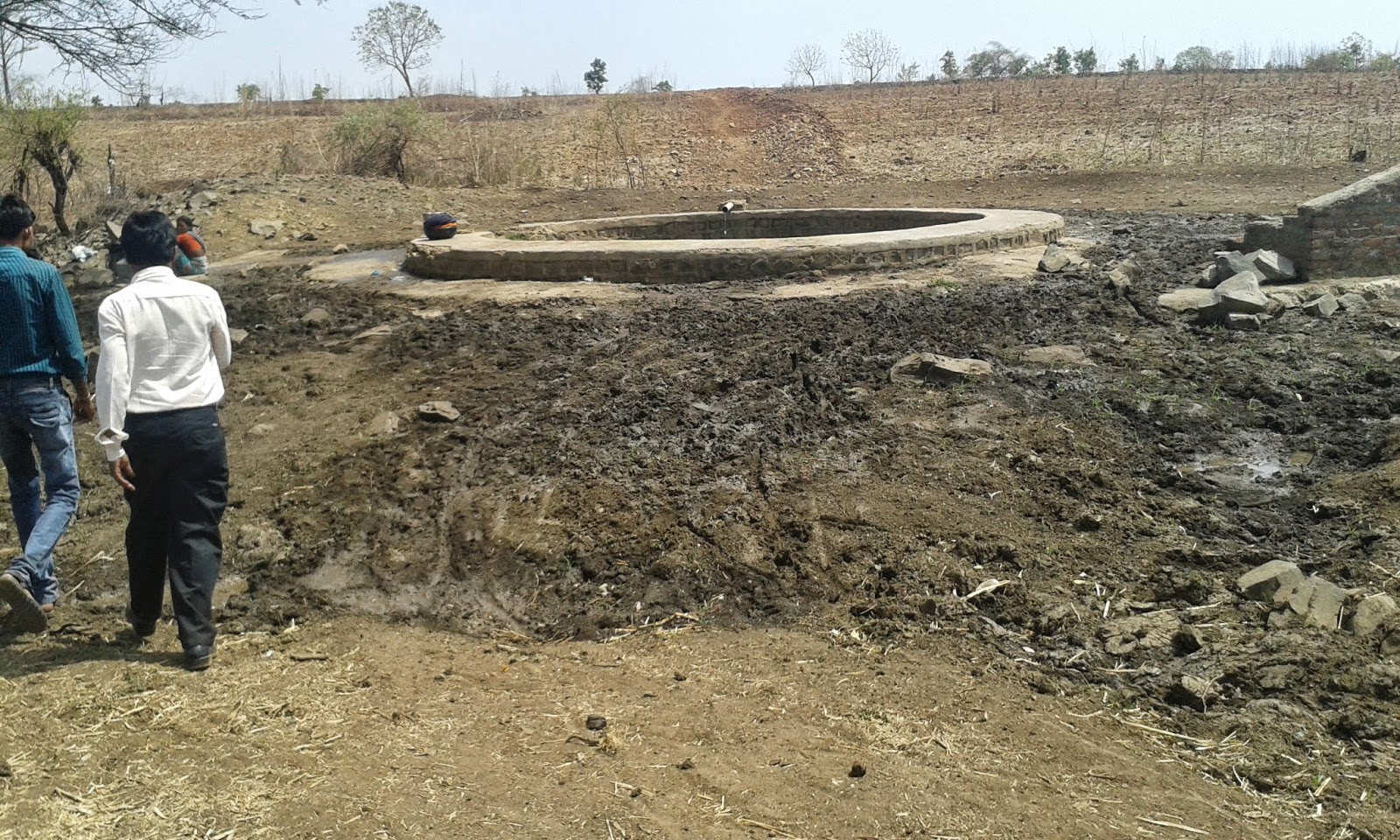 |
| Fig-5: Common water source of palaskund village |
This village has highest number of waterwheel user. A clear navigable path through stony cotton field in fig-7 is an impact of
waterwheel.
 |
| Fig-6a: Dried well of village palaskund |
Palaskund was my first village in
Yavatmal. I visited three times to this village. When I reached to this village
for first time, It was noon. Temperature was ~114 oF. I walked
straight to well which was current water source. I can roughly say that the
distance will be around ~1.5km from village. I started feeling headache as I
walked down to well in such extreme temperature. It gave me a thought that how
are villagers managing water collection from this water source. Further, I was
shocked when I reached at water source. There were hardly 10-20 li water left
in the well. However, more then 5 families were trying to take some portion of
water. It is clearly depicted in figure-6. Water in the well comes from another
village which is around 5 km from Palaskund. As a result only limited water is
provided to palaskund during summer. People wait since mid night to collect
water once water is accumulated in the morning.
 |
| Fig-6b: Villagers collecting water |
Further discussion with villagers
revealed that there is another water source which is ~3 km from village.
However, only few people collect water from distant water source as it takes
more than 1.5 hrs for one trip. In such location, waterwheel works as a life
saving product. It doesn’t only reduce drudgery but also saves time and
increases opportunity to earn. This kind of water problem is present in almost
all villages where I visited in six weeks period.
Next time, I’ll discuss about my
experience in actual field demo and people’s enthusiasm for waterwheel.
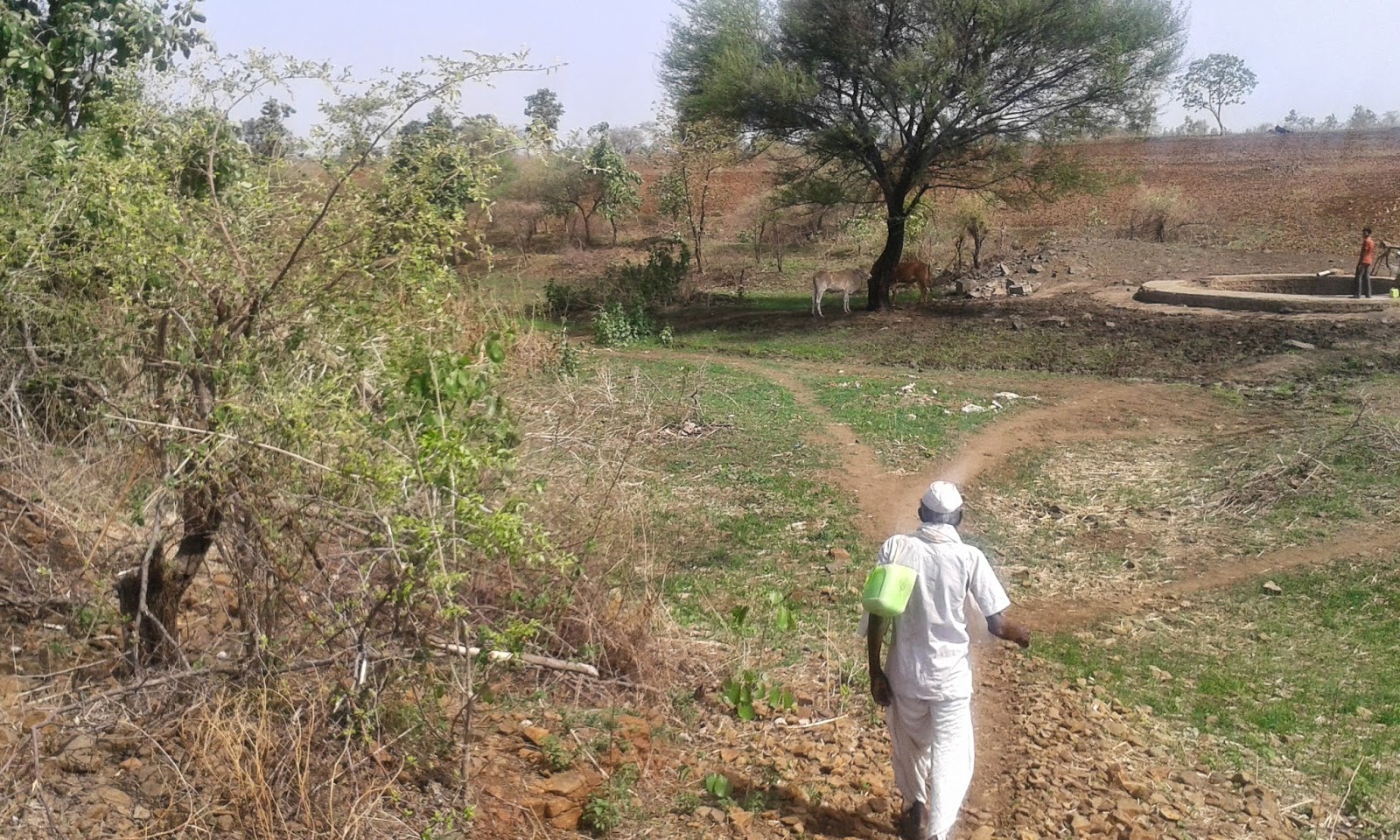 |
| Fig-7a: Path near well |
 |
| Fig-7b: a clear navigable path on the way to well. |
 |
| Fig-7c: A clear navigable path to Well. |


